Client website · Live
Healthcare website
Signature Dentures
A welcoming website for local denture care, with clear information and a simple way to get in touch.
Explore the project (opens in a new tab)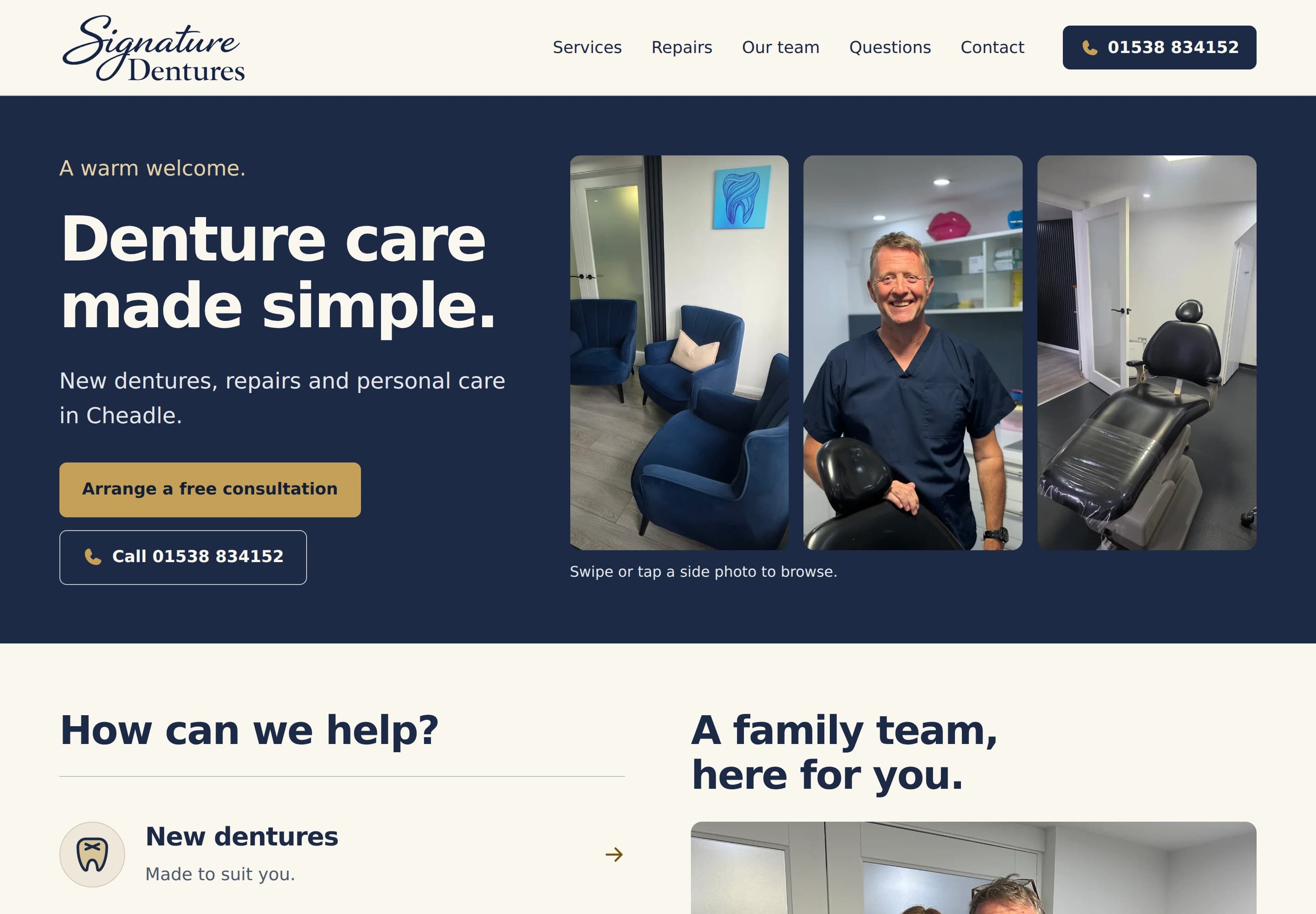
- Service-led website
- Practice & team pages
- Clear contact routes
The project
What we set out to build
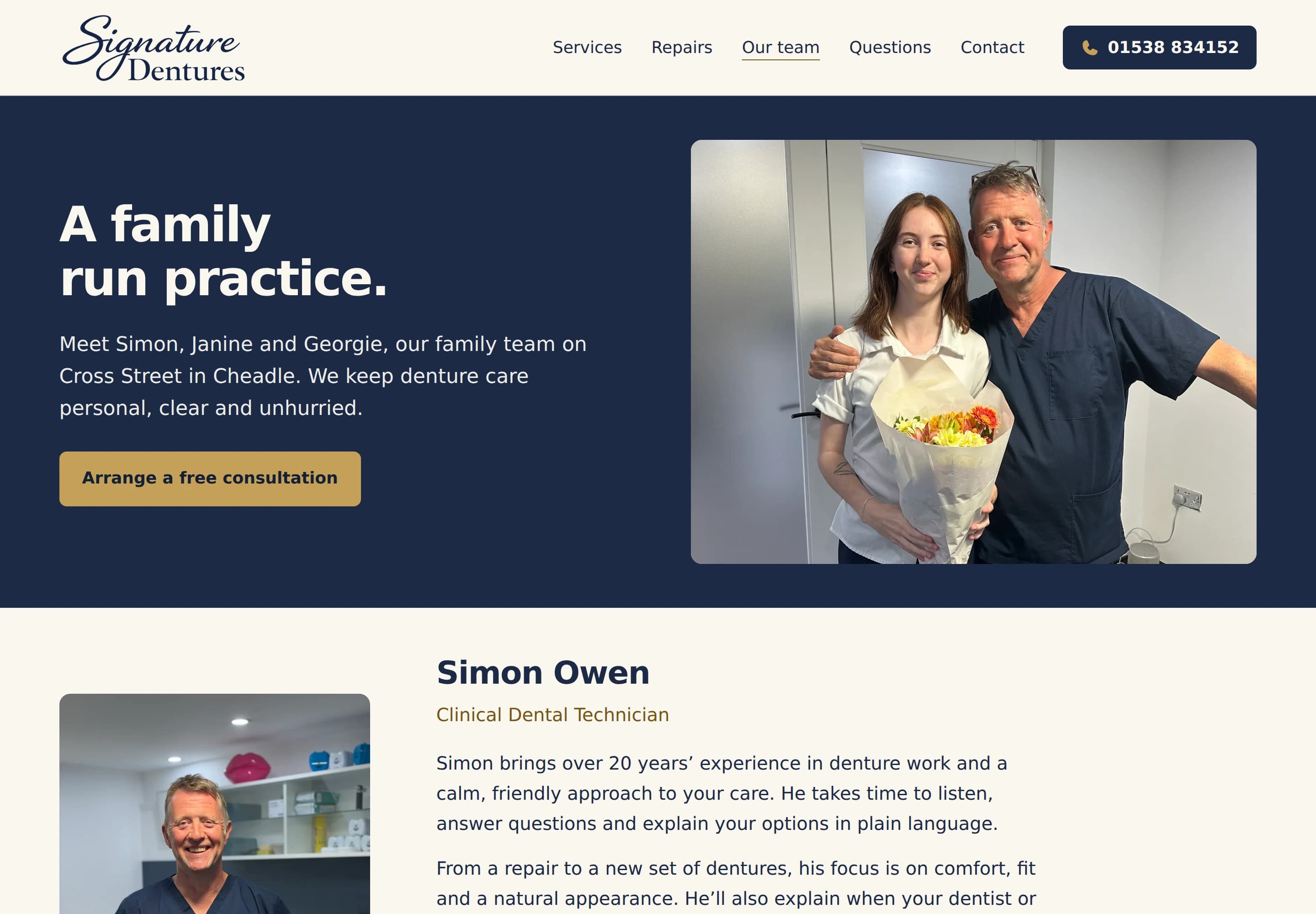
Signature Dentures needed a website that explained its care, introduced the people at the practice and made different enquiries straightforward. We worked across the public pages, contact handling and shared interface, with particular attention to visitors arranging care for themselves, a relative or someone they support.
01 / Foundations
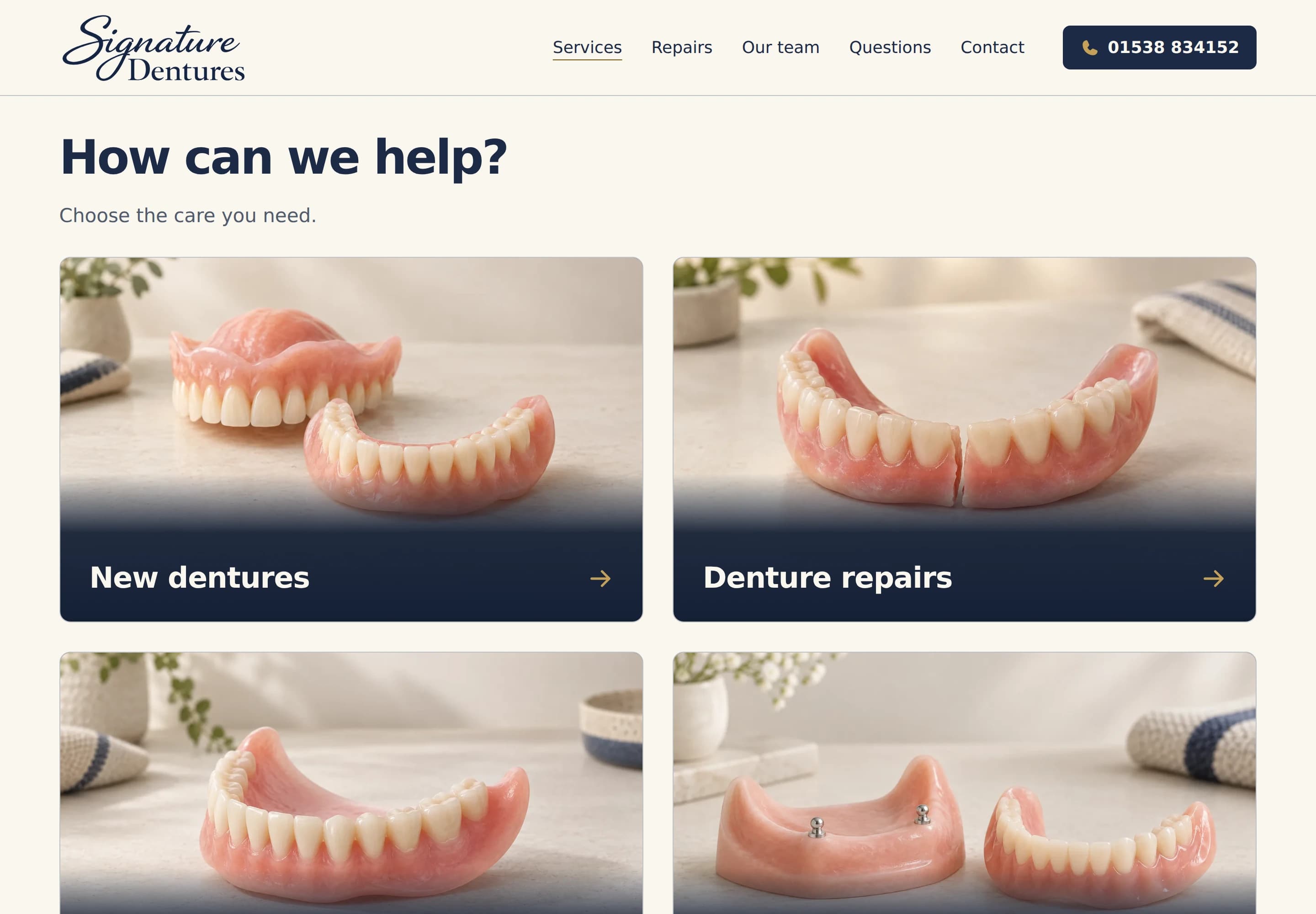
Structuring the care information
We organised the main journey around understanding the care, meeting the practice and getting in touch, while keeping the individual treatment and information pages available. Repairs, new dentures and comfort adjustments need different explanations and enquiry routes. The content and forms account for those distinctions, including people contacting the practice on someone else's behalf. A shared page system brings the typography, spacing, controls and navigation together so supporting pages receive the same attention as the homepage.
02 / Implementation
Keeping the foundation straightforward
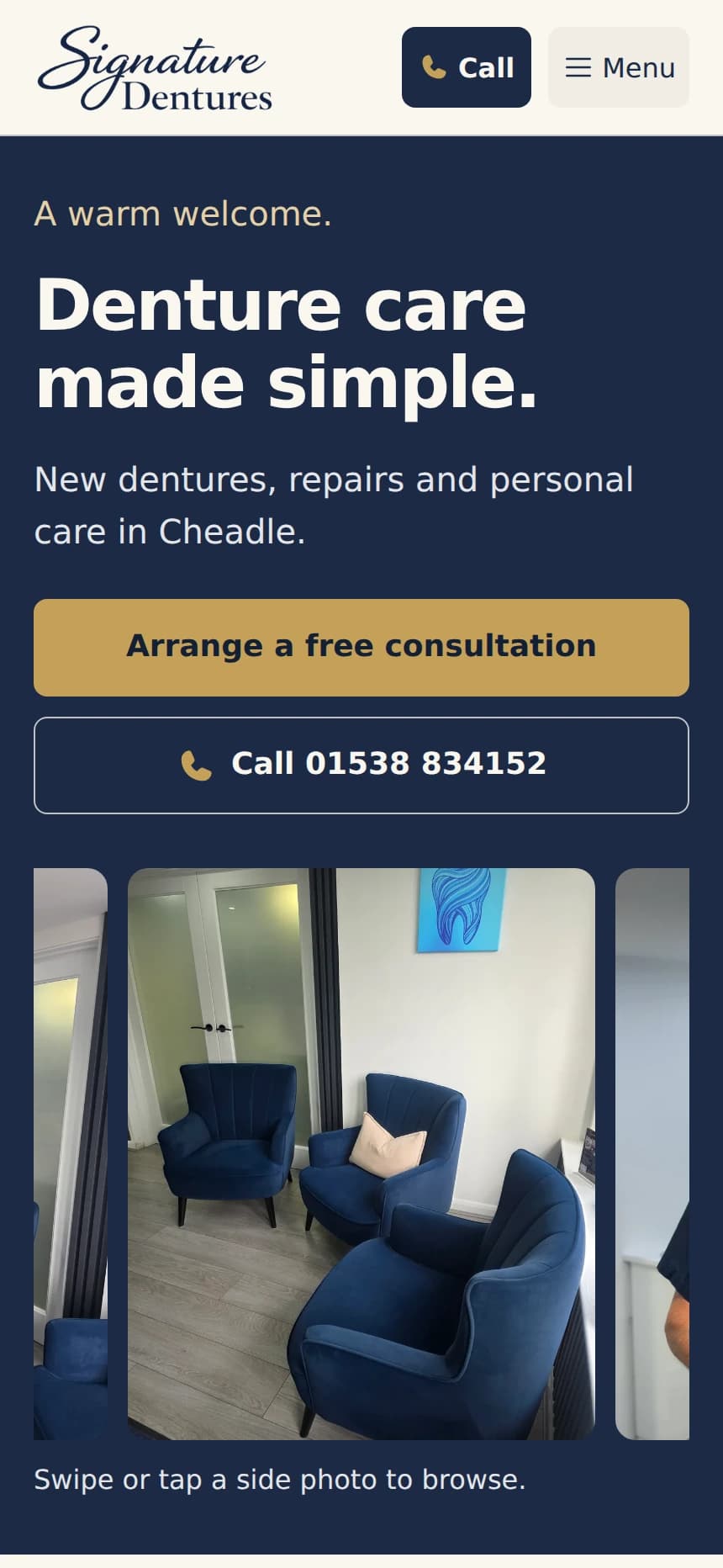
The website uses HTML, CSS and JavaScript rather than a client-rendered application for its core pages. That keeps the service information and ordinary links available while JavaScript adds treatment panels, gallery controls and contextual form choices. The contact form submits to a Vercel function that sends through Resend. We also developed a Three.js dental-process viewer in the current codebase, using illustrative tray, cast and denture models with labelled controls and a fallback when 3D rendering is unavailable.
03 / Refinement
Checking the details around an enquiry
The enquiry work goes beyond styling the form. It includes service preselection, telephone and email contact preferences, accessible validation and clear sending, failure and confirmation states. Server handling limits and checks incoming fields before delivery, with bounded provider requests. We added automated checks for the endpoint and the static pages, covering internal links, metadata, structured data and missing assets. Navigation, mobile text wrapping and the shared layout were refined separately so those improvements carry across the site.
Where it is now
The live website supports the practice's service information, team pages and enquiries. The project also established shared page styles, a tested contact endpoint and validation scripts, alongside continuing development of the more interactive care and process presentations.